

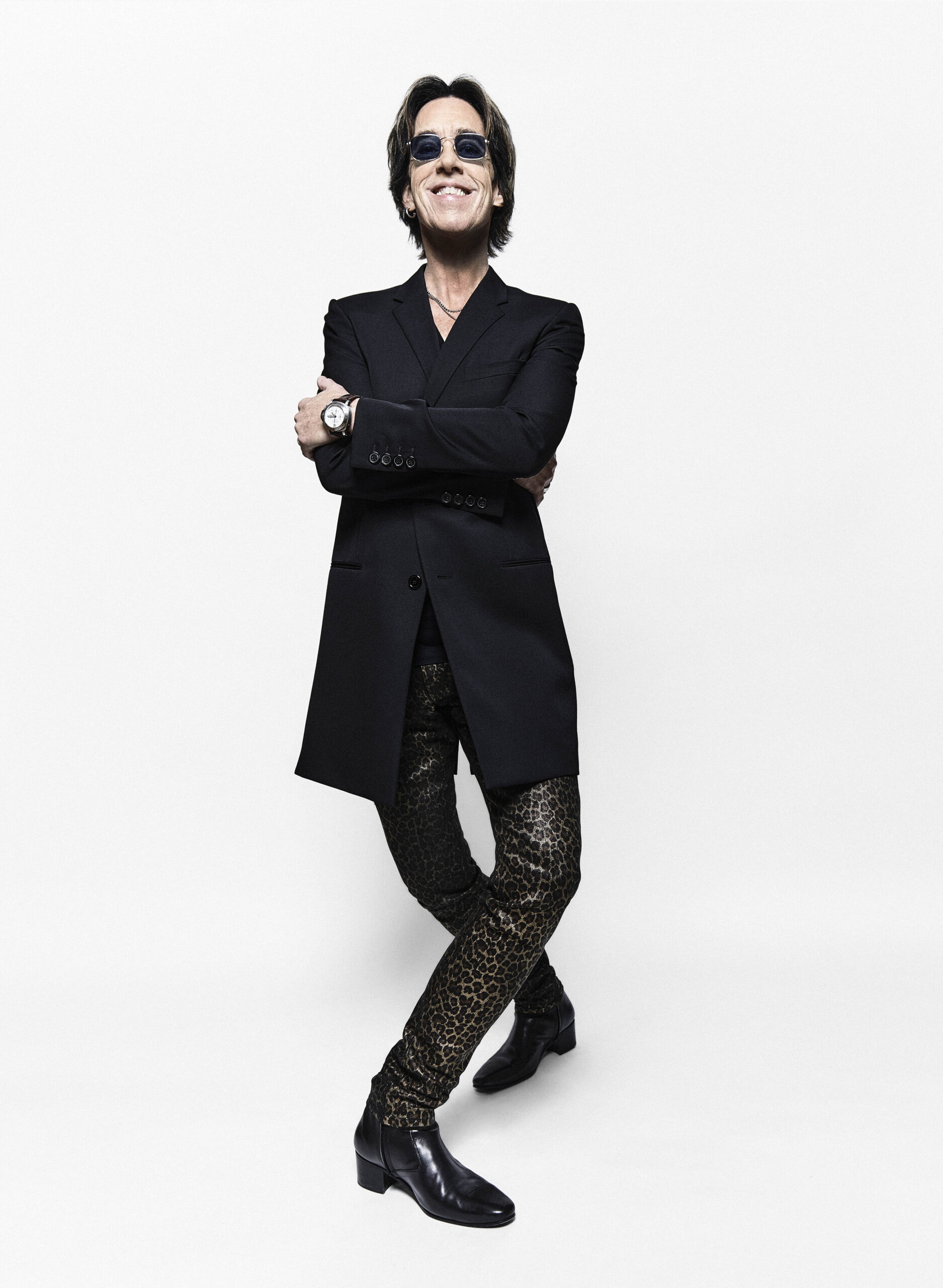
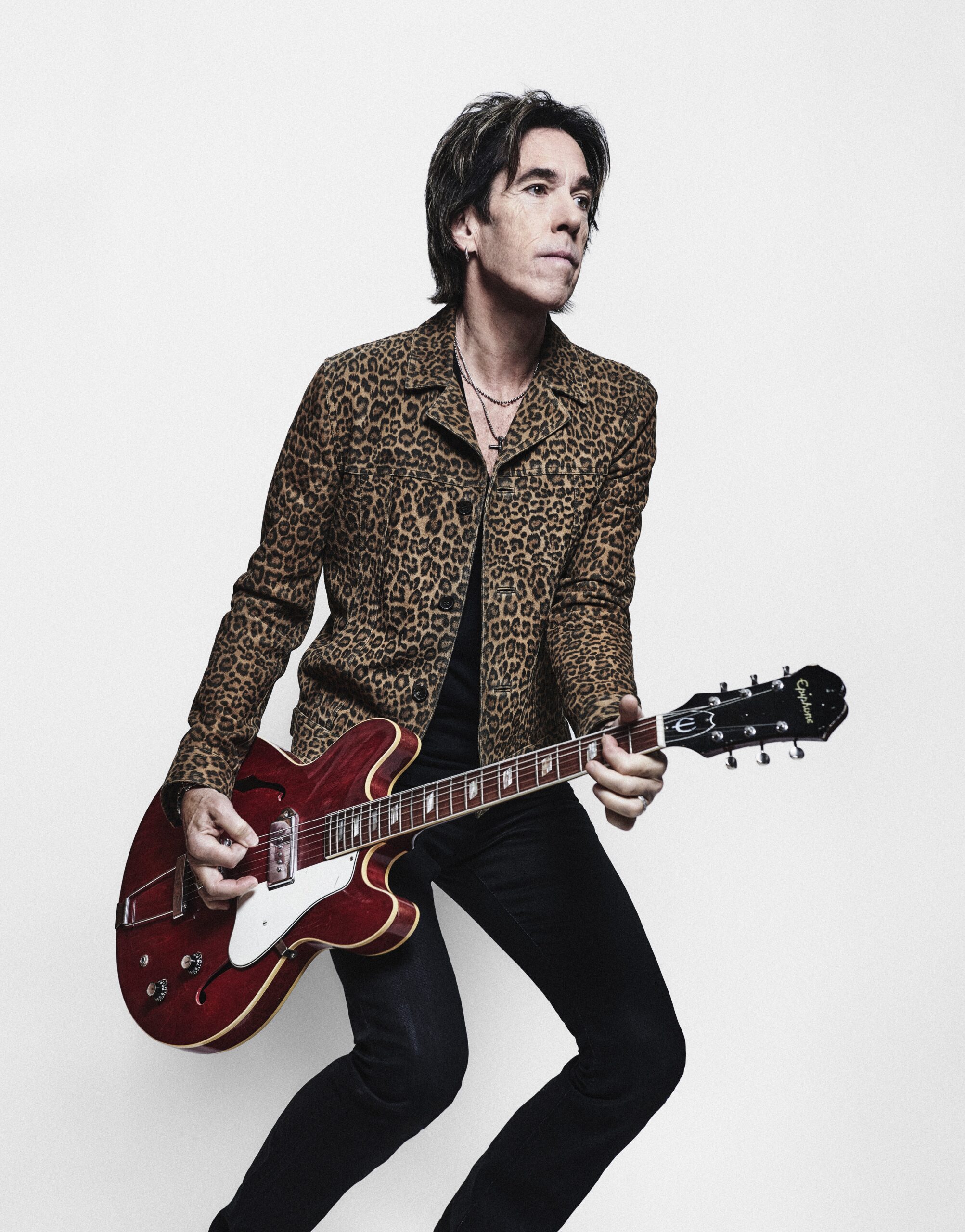

From the names and wordplay of the early Gyllene Tider lyrics to Roxette’s international breakthrough and the more reflective world of his Swedish solo albums. In an in-depth conversation with Musikpulsen, Per Gessle talks about writing for Marie Fredriksson, the people who have changed his music and how songs take on a life of their own with listeners. But also about self-doubt, trust, Lena Philipsson and the difficulty of finding a new reason to write the next song.
It begins with a few old songs, and with hearing them differently than I used to.
When I listen with my son, three titles in particular stay with me: Skäl att tvivla, Leka med elden and Chrissie, hur mår du? Songs that have been with me for years suddenly carry a different weight. What were once words to puzzle over as a child have become something I recognise as an adult.
For me, they are about the different possibilities of love: daring to approach someone despite the risk of being hurt, feeling sorrow when something has not turned out as you imagined, hoping while also fearing that what you are building might fall apart.
Those are the thoughts I bring to my meeting with Per Gessle. What was it about love and people’s emotional lives that fascinated him when he wrote those early lyrics? How could words written so young have such a long life?
“Good Lord, you do ask difficult questions.”
Before answering, he silences a phone that is pinging. Then he begins somewhere other than I had expected: with his interest in writing itself.
“When I started writing songs, I started by writing lyrics, because I’ve always been interested in lyrics and I’ve always been interested in writing.”
“I mean the written word, and the physical act of writing. I tried to develop nice handwriting and all that. So I’ve always been interested in form and graphic design. Lyrics have always been important to me.”
At the same time, he has come to realise that many people do not listen particularly closely to lyrics. Throughout our conversation, he returns to the way titles, word choices and small turns of phrase give a song its individual character.
The words that made Gyllene Tider Gyllene Tider
When Gessle talks about the initial breakthrough, he returns to how the lyrics helped Gyllene Tider stand out. He mentions Flickorna på TV2, (Dansar inte lika bra som) Sjömän, Ska vi älska, så ska vi älska till Buddy Holly, Billy and När alla vännerna gått hem.
There was a recognisable voice there. Proper names, pop-cultural references and phrases that could be both subtly witty and immediate. I bring up the playfulness of the early records, and how it gradually seems to make more room for vulnerability and seriousness, particularly around Puls and the first solo albums.
“Yes, I do move in that direction, because that’s what happens as you get older. If you looked at the very first lyrics I wrote, when I was twelve, thirteen, fourteen, they’re incredibly precocious. I’m trying to write about things I’ve never experienced and don’t understand at all.”
Those subjects might be love and friendship, but also religious questions. His mother was very religious, he tells me. The subjects were around him before he had much experience of them himself.
Over the years, the lyrics became more serious, for better and for worse, as he puts it. He also thinks they became a little more anonymous and more grown-up than the early Gyllene Tider lyrics.
Flickan i en Cole Porter-sång becomes an example of how a title can evoke an entire imaginative world. You have a picture in your mind before the story has even been told. The same thing happens when Buddy Holly appears in a title, or when a character is given a name instead of simply being “she” or “he”.
“All those proper names give the lyric a label. Billy, Chrissie, hur mår du?, Henry dansar inte disco. It’s not something I invented. Lots of lyricists work that way: Bruce Springsteen, Leonard Cohen or Van Morrison.”
Somehow, a person with a name becomes less anonymous, even when the listener knows nothing about them. I point out that a name can also leave the interpretation open, for example when it does not immediately suggest the person’s gender.
This makes Gessle think of Kris Kristofferson’s Me and Bobby McGee, and the story of how someone else gave Kristofferson the idea for the title. He cannot remember who it was, though.
After the interview, my curiosity sends me looking further. It turns out to have been record producer Fred Foster, whose idea came from a joke about Barbara “Bobbie” McKee, a secretary at an office in Nashville. Foster suggested the title Me and Bobby McKee to Kristofferson, who heard the name as “Bobby McGee” and built his own story around it.
A name, then, can be the beginning of a story that listeners fill with their own ideas and experiences.
Personal does not always mean autobiographical
The fact that Gessle began by trying to write about things he had not yet experienced leads to an obvious question when listening to his love songs. How much of them is really his own life?
“I would say it’s very rare for a lyric to be a hundred per cent true or a hundred per cent me. When I write, I might start from something I feel strongly about. But then I create another persona, another reality, for the sake of the song, to make it more interesting.”
A personal starting point does not necessarily make a song autobiographical. Even the choice of words within a single lyric can change the feeling.
“You can start out in the first verse using a certain kind of words, while in verse two you use a different kind. Those words might give the second verse a slight harshness that isn’t there in the first. That’s about developing the structure of the lyric, not just its content but its feeling as well.”
That, he believes, is where an individual style can emerge.
He contrasts this with his experience of AI-generated lyrics, which he feels lack precisely those personal shifts. In his description, they become efficient and generic, whereas he is looking for whatever gives a lyric its particular emotional charge.
“There’s nothing more boring than listening to a pop lyric and feeling you’ve heard it before. You’ve heard those expressions before. People joke about ‘heart’ and ‘pain’ in those old schlager lyrics. That’s because everyone uses them.”
“If you can find rhymes and ways of placing words that are unexpected and different, the lyric has a completely different power.”
A simple pop sensibility and the need for other people
When we talk about development, Gessle also touches on his relationship with musicianship. He has often wished he were a better player. At the same time, he is not sure he would have written the same music if his technical skills had been greater.
“If I’d had different technical skills as a musician, I would never have written this music. You only have that simple pop sensibility if you’re fairly primitive musically. Then you try to find help to make the production and arrangements a little more sophisticated. I’ve always been lucky enough to find that.”
First there was Mats “MP” Persson, as far back as the early band Grape Rock and then in Gyllene Tider. Later came people including Clarence Öfwerman and Christoffer Lundquist.
“I was a sort of conductor. Could you play it like this? Can you play it this way? I knew nothing about keys or key changes.”
Billy becomes an example. He played the guitar figure the way he knew how, and that determined the song’s key. The fact that it then suited his voice is something he describes as luck, rather than the result of a carefully calculated plan.
When I suggest that more guitar practice might have taken time away from writing lyrics, he corrects my reasoning. It is not primarily about the number of hours spent practising. It is about different kinds of musical ability.
He mentions the orchestration work for the musical, and musician Joakim Hallin. Hallin’s ability to think in terms of different instruments, registers and vocal arrangements is a different skill from his own.
He sees the same difference between himself and Clarence, Christoffer and Marie Fredriksson. He describes their musical ability as being on a different planet from his own. And yet he was the one who wrote Listen to Your Heart, It Must Have Been Love and The Look.
“My musical ambition is much, much, much greater than what I can actually do. That’s why I need help.”
His relationship with lyrics has been different. There, he has sought out the expression himself and tried to find his own style.
When words and music paint the same picture
I bring up Bruce Springsteen and the possibility of setting a sad story to music that sounds exuberant. With Gessle, I often feel that the words and music are emotionally closer together: that the wistfulness in the words is also there in the melody.
“Hearing you say that makes me quite happy, because that’s my ambition. I’m really trying to paint the same picture with the lyrics as with the music. For them to say the same thing and help each other reinforce a feeling.”
The Look works differently. There, the words began as a way of capturing the music.
“I wrote the first verse of The Look to remember the rhythm. There was a rhythmic pattern I wanted to remember, so I just wrote down everything that came into my head.”
He also talks about a connection to Nick Lowe and Born Fighter. Along with Tom Petty and the Beatles, Lowe is one of his great favourites, and Gessle says he later told him about the connection.
As Gessle describes it, the reason The Look works lies in its particular musical character. It is simple but angular. A chord change suddenly introduces a different colour. He hears both Devo and ZZ Top in the mix, without reducing the song to either of them.
That musical mix, he says, can support a lyric that is not really about anything. The words are carried by the rhythm and the sound.
For me, Roxette’s songs were also a way of learning to play guitar. In the early nineties, I sat with the songbooks for Roxette’s albums and learnt the chords to songs whose sound I already knew. I tell him this, and he says it is lovely to hear.
Writing for Marie
Roxette also meant that Gessle began writing for another voice. He had to think about who would sing the words, and what happened when he and Marie sang together.
In Paint, he describes his own verse as more masculine, while the words he gave Marie to sing were softer. He imagined different roles as he wrote.
“I tried to adapt the content and the words to whoever was going to sing them. If you look at Dressed for Success, it has quite an interesting idea: I ask Marie questions in the bridges. She tells her story, then I come in and ask her questions, which she answers, and then she goes on telling her story.”
The duo gave him the opportunity to build a dialogue into the performance. The same words can also take on different meanings depending on who sings them. His example is Småstadsprat, the duet with Lars Winnerbäck.
“Helena sings on a demo, and when Lasse sang it with me, it took on a different meaning because he’s a man, compared with when she sang it. Even though he sang exactly the same lines.”
A song that never had time to grow
When we turn to the English lyrics, Gessle talks about how he feels they developed from Pearls of Passion through to the later Roxette albums before Marie’s illness. He hears a different authority in them. He had become better at writing in English.
He mentions several lyrics from the later albums, and when I suggest Salvation, he agrees. It Takes You No Time to Get Here and No One Makes It on Her Own also come up, although he hesitates over which album the latter belongs to.
I bring up Vulnerable from Crash! Boom! Bang! For me, it is an example of words and melody coming together in a way that still feels immediate. His own relationship with the song is more self-critical.
“I think I should have worked a little more on that lyric. I like the title and I like the hook in the chorus, but I think it tries a little too hard to please in its choice of words. The problem with that song for me was that I had it in my head for about a year before I made my demo.”
He was travelling and working, and the demo never got made. Once it finally did, they soon moved on to recording.
“It never really had time to grow naturally for me.”
I ask about a turn of phrase in which vulnerability can sound like a reservation. To me, it is something necessary instead, a prerequisite for closeness. Gessle focuses on the technique itself: the difference between joining something with “and” and introducing a “but”.
“With ‘and’, you’re going in one direction. Add a ‘but’ and you go in another. It’s a way of making the lyric a little more complicated, because suddenly you’re negating what you said before, and that can become quite interesting in a lyric.”
More music between the words
I ask about the shorter lyrics on En vacker natt and En vacker dag, and the feeling that he leaves more space for the music there. Has he learnt over the years to let it carry more of the weight?
“I’ve never really taken advice of that kind. You evolve whether you want to or not, or you could call it getting more involved, because things do get more and more complex at times.”
He agrees that the lyrics on those albums are fairly short. But he feels the trust in the music was there much earlier. During the Roxette years, themes and arrangements were often given plenty of room.
He mentions Joyride and Crash! Boom! Bang!, and songs where a new theme can appear just when you almost feel the song is finished. Come Back (Before You Leave) and Love Is All are two examples. He compares that way of building on the music to symphonic rock, a musical world Clarence Öfwerman brought with him and was keen to embrace.
“There, I felt I relied very much on the music and put a lot of trust in Clarence and his arrangements. It’s not something I’ve only taken on board in recent years.”
What has become harder is finding a reason to write the next song.
“It’s difficult to write new music, and it’s difficult to write new lyrics, because you’ve written so much. I have to find a reason to finish a lyric, or to write one.”
Kjell Andersson and the path he did not want to take
When we resume our conversation after a break, we start with Kjell Andersson. I tell Gessle how Andersson’s book led me to discover more music by artists including Basse Wickman and Magnus Lindberg, and ask what he has meant to Gessle’s development.
Gessle describes the relationship as complex.
“Kjell meant an incredible amount to me when we started. He was the one who signed us to EMI. With the first records, it was very much about trying to keep him happy, since he held all the power. We listened very closely to what he said.”
But there were also clear differences in how they saw Gessle’s future. The first concerned the early solo albums. According to Gessle, Kjell wanted to steer him towards the singer-songwriter tradition, the world of artists such as Basse Wickman, Magnus Lindberg and, to some extent, Ulf Lundell.
“I felt I couldn’t compete with Ulf and many others who had very distinctive ways of writing. I didn’t feel that was really what I was good at. I never felt entirely comfortable with those first two solo albums.”
The other major dividing line was Roxette. As Gessle remembers it, Kjell was not a supporter of the project when it began in 1986. He wanted Marie to concentrate on her Swedish career and Gessle to find another path.
“I had to work around him a little to get Roxette going the way I wanted. And when Roxette broke through in 1989, it became so big that saying no to Roxette was no longer an option.”
It is a critical account, but it also allows for the record company’s perspective. When we talk about Basse Wickman, Gessle reflects on how difficult it is to launch a Swedish singer-songwriter internationally in a genre full of highly accomplished competitors. Swedish lyrics can give an artist a distinctive place at home.
The same conflict surrounded Gyllene Tider’s English-language album The Heartland Café. According to Gessle, Kjell thought the venture was a disaster. Gessle nevertheless sees value in the experience.
“It wasn’t a good record, but it was an incredibly good education for me in what was to come.”
The rejected album that became Roxette
When Gessle tells the story of Roxette’s beginnings, what emerges is far less inevitable than it might seem in hindsight.
Marie was already close to him and Gyllene Tider. She sang on Rädd and Tända en sticka till from his first solo album, Per Gessle, he tells me. He also remembers her taking Eva Dahlgren’s part in Vandrar i ett sommarregn when the song was performed on the television programme Casablanca and Eva could not be there. Marie also sang on Inte tillsammans, inte isär on 1985’s Scener. On Gyllene Tider’s English-language album The Heartland Café, Marie sings on Run, Run, Run and Break Another Heart.
Through their work around EMI and Lasse Lindbom, they had mutual contacts and closely connected musical worlds. But that did not mean Roxette was a fully formed plan with an obvious future.
“I made demos for the third Swedish solo album, but Kjell and EMI didn’t like it. They never picked up my contract.”
Then a commission came from elsewhere. The head of Alpha Records told him the label had signed Pernilla Wahlgren and wanted Gessle to write her first single for them. He wrote Svarta glas.
After that, by his account, he heard nothing back. Not even a “no, thank you”.
There was also a rumour that Niklas Wahlgren had recorded the song. Gessle is clear that he does not know whether that is true and has never heard such a version. He says he nevertheless contacted the company to point out that the song had been written for Pernilla, not for another artist to record and release without his being informed.
EMI boss Rolf “Roffe” Nygren, however, liked the demo. His suggestion was that Gessle should write English lyrics and record the song with Marie. After all, they had talked about doing something together in English.
“So I tried to persuade Marie, and she wasn’t all that interested, because she didn’t think it was the greatest song in the world. It wasn’t really her thing. It wasn’t really my thing either. This was for Pernilla Wahlgren, after all, but we recorded it.”
Svarta glas became Neverending Love.
As Gessle remembers it, Kjell wanted to limit the risk to Marie’s Swedish career. Neither she nor Per therefore appeared on the sleeve of the Neverending Love single. Instead, it featured an illustration of a couple, taken, according to RoxetteBlog’s account of Kjell Andersson’s memoirs, from an American weekly magazine from the 1940s that Kjell had found in the attic.
The single was released in the summer of 1986 and became a major success. Suddenly the record company wanted a whole Roxette album. Marie began to find it exciting. Gessle describes it as her getting to feel like a pop star in a new way.
Much of the material for the album already existed, on the rejected Swedish solo album.
“I took that album and translated most of the songs, and it became Roxette’s first record.”
In our conversation, he mentions the Swedish originals of Goodbye to You, I Call Your Name and Call of the Wild: Farväl till dig, Jag hör din röst and En känsla av en kvinna.
An expanded 40th-anniversary edition of Pearls of Passion will be released on 20 November 2026, featuring the original album and bonus material from around the time of the debut. And Gessle tells Musikpulsen that more material is on the way: a separate release of Swedish-language demos from the rejected album is planned for the following week.
Marie before everything became professional
Gessle has previously been lukewarm about Pearls of Passion, something I bring up because I like the album so much. Now he says he has begun to reassess it.
Above all, he is hearing Marie in a new way.
“I think Marie is so bloody good on it. There’s something so untouched, so unspoilt about her voice there. She just sings on intuition, the way only she could. Later she became what we all became: we became pros, we became professional, and we became bloody good at what we do. But there, she’s just raw talent.”
The comparison he reaches for is someone getting into a go-kart without ever having driven one and immediately setting a lap record. The ability is simply there.
When I later ask what he misses most about Marie, the answer also extends beyond any single quality or memory. He misses the whole period when they were building something together.
“I can miss that whole time in our lives when we were building things. It’s not just Marie, it’s that whole era when Gyllene broke through. Everything that was fantastic about it, and everything that was difficult too. There were downsides to all that celebrity stuff that you weren’t prepared for.”
The first two Roxette albums are among those he describes as the most enjoyable to record. They were still unspoilt then, and moving forward. For him, the first album also had a particular significance: material that had previously been rejected was given a new life.
Clarence found the groove
One criticism Gessle remembers from the days before Roxette was that you could not dance to his songs. They were pop songs, but according to that criticism they lacked a natural groove.
He did not really know what to do with that assessment. This was how he wrote. How do you change that?
Then Clarence Öfwerman came into his life.
Gessle recalls an occasion at the EMI studio in Skärmarbrink. He had gone to get coffee and heard music coming from upstairs in the studio. The closer he got, the clearer it became that he was hearing his own song: I Call Your Name.
“The coolest riff in the world, and a really lovely groove. Clarence arranged my songs so that you absolutely could dance to them. It gave me an enormous amount of confidence.”
With Clarence’s help, the songs had acquired the movement he had not known how to create himself.
After Pearls of Passion, there was both success in Sweden and interest from EMI in Europe. So when they began working on Look Sharp!, the circumstances were different.
But for Gessle himself, the biggest difference lay in the writing. Now Marie was the intended singer from the moment the songs took shape.
From his perspective, that made Look Sharp! the first true Roxette album. Songs such as Dressed for Success, Listen to Your Heart, Dangerous and Sleeping Single were written with her capabilities in mind.
The accident that changed the sound
The sound that would define Look Sharp! was not a foregone conclusion either.
Recording began with the same kind of band line-up as on the debut album. Gessle mentions Tommy Cassemar, Pelle Alsing, Jonas Isacsson and Clarence Öfwerman. Pearls of Passion had been a fairly organic record. But now he wanted to move further into machines, synths and programming.
“We started recording a few songs for Look Sharp! with the same bunch, but I thought it sounded awful. I didn’t like it at all. I was very frustrated and found it really difficult.”
Then recording engineer Alar Suurna broke his leg, and a replacement was needed. In came Anders Herrlin, Gyllene Tider’s former bassist, who had immersed himself in synths, programming and modern studio technology. He and Clarence Öfwerman clicked in the studio. What began as a temporary solution became crucial to the musical direction of Look Sharp!.
“Anders was completely focused on and fascinated by technology, programming, synths and all that, so he and Clarence hit it off and started programming those songs instead.”
The previously recorded band material was thrown out.
“The only song on Look Sharp! with a real drummer is Listen to Your Heart. Everything else is programmed.”
Having to keep delivering
“Gyllene Tider was a band where the five of us started from scratch and worked it up together. Roxette was more of a project.”
After the first album, it was not a given that Marie would want to make another. She had her Swedish career, and people around her who were keen for her to prioritise it.
“My only way, my only weapon for keeping Marie on board, was to deliver the best songs I possibly could.”
International success made it easier. For both him and Marie, it was something they had long dreamt of, but which had seemed highly unlikely.
Gessle describes an industry where Britain and the United States dominated the idea of international pop. There were exceptions, of course. He mentions Dutch band Golden Earring, whose international breakthrough came with Radar Love in 1973, as well as Scorpions and ABBA. But for two artists from Sweden, the route to the wider world was far from obvious.
When the breakthrough came, the United States was the first big opening, as he remembers it. It was hard to imagine a more overwhelming start.
In the years that followed, his main task was to keep delivering for Roxette. Marie also made Swedish albums between their joint records, while he was deeply immersed in the English language and Roxette’s world.
After Crash! Boom! Bang! and the major tour, Marie wanted a break. She also had her second child. When Roxette took time out, Gessle continued writing in English.
“Of course I offered it to Marie: this could become a Roxette album. It would have been a much, much better album if Marie had sung it.”
He mentions Stupid, Do You Wanna Be My Baby?, Elvis in Germany and Lay Down Your Arms as examples of material he still likes.
Here we are talking about The World According to Gessle, but also about how several different musical lives could run in parallel. Roxette was on a break, Gyllene Tider returned, and Gessle continued working in new settings.
Gyllene Tider returned and old songs found new lives
As we move through the nineties, he pauses at Halmstads pärlor. He remembers writing Det är över nu in Tokyo during a Roxette tour. Kung av sand was another of the new songs on the compilation.
Its success led on to the Återtåget tour in 1996. With the new songs around Gå & fiska! and Juni, juli, augusti, the comeback gained further momentum. Gessle describes how Halmstads pärlor became Sweden’s best-selling album two years running, in different editions.
I put in a word for the earlier compilation Instant Hits! and the songs by Pers Garage. He agrees that this was another lovely part of the story, although it was the nineties comeback he was talking about just then.
The conversation also takes a detour to The Lonely Boys. When I previously interviewed Nisse Hellberg, I asked about a follow-up, and he told me to put the question to Per Gessle. Nisse was interested.
“I know he’s asked me, but I’m damned if I know whether it’ll happen. It was a bloody fun record, though.”
He also remembers working with Thomas Holst fondly, and praises him as a bass player.
Old recordings are by no means closed chapters for him. A clear example is Break Another Heart from The Heartland Café.
“I’ve always thought that was the best song on that album. And I’ve never thought it was performed particularly well. My singing was bad and so on.”
When, many years later, he wrote Swedish lyrics for the music that became Henry väntar på en chans for the album Sällskapssjuk, it was given another chance. Clarence and Christoffer had not heard the original. To them, it was a new song, with no preconceived expectations about how it should be played.
I also mention Blåa jeans och röda läppar, which was reworked into Enkel resa on the album En vacker natt. Some details were changed in the later version.
“I change what I don’t like.”
Finding his way back to Swedish
When we talk about Mazarin and the return to Swedish lyrics, Gessle comes back to the period after Marie became ill. Roxette’s future was uncertain. He did not really know what to do.
Swedish songs had already begun coming back before then. He mentions Gungar as one of the early ones, but hesitates between 1999 and 2000.
Meeting Christoffer Lundquist brought about, he says, quite a major revolution in the way he worked. Christoffer had a different method and a broad range of musical abilities.
“He’s incredibly musical. He can play any instrument.”
Christoffer’s free approach to recording could have both advantages and disadvantages, depending on your perspective. For Gessle, that way of working suited him very well at that point.
“Starting to work with him was a challenge for me, because I didn’t know what it would be. Marie had become ill. Nobody knew what would happen to Roxette. This was a really good moment to try something completely new. But I wanted to keep Clarence.”
“We were in his studio, staying in this sort of abandoned house. Everything was incredibly basic, and that journey went on for many years. I made a lot of records down at Christoffer’s over the years.”
When I ask about a thread of longing, melancholy and human closeness running through the Swedish albums, he does not want to oversimplify the change. The subjects remain. The great difficulty is finding a new angle on them.
“When you’ve written a thousand songs and you’re going to write your thousand-and-first, it’s bloody easy to repeat yourself. And it’s the same with lyrics. If you’ve written about the positive sides of love, the negative sides, heartbreak or whatever it is, you’ve done it. You try to find a new angle on it somehow. A tiny, tiny fraction that’s different, so it has a character of its own.”
He says he would rather communicate emotionally than write political lyrics. That is where he feels his own form of expression lies.
Trust that has taken time
Towards the end of our conversation, I return to Skäl att tvivla. If he were to write a song today about daring to trust life and another person, what would it be about?
His answer comes close to his own life.
“Then I’d probably write something about my wife. We’ve been together for 42 years, so we know each other inside out, and of course I trust her, and vice versa. That really runs through quite a lot of my life. I have very long relationships with people.”
He sees the same continuity in his working life. Many people have been there for decades. He mentions Marie Dimberg, with whom he has worked since 1986, and his business manager Jan Beime, who began looking after him back in 1980 and still works with him.
His collaboration with Tomas Johansson and the continuity of his record-company relationship also come up. Company names and ownership have changed, but for Gessle there is a sense of long relationships enduring through those changes.
I suggest that perhaps he does not abandon something that works just to try something new. His answer is both yes and no.
“When you’re involved in creativity and creative things, you have to keep challenging yourself too. I’ve tried to do that by changing a few of the people at a time, for example.”
“You shouldn’t change things for the sake of change, but you should always have your antennae out, looking for something you can change and hopefully improve.”
Nobody stands still as a person, he points out. He is not the same person he was twenty years ago, and still less the person he was when Gyllene Tider began.
“If you’ve found a style and something you really like — really, it’s enough simply to have a taste in music, something you’re genuinely passionate about — then there’s no reason to change it. What you should change is how you bring it out.”
“If I take the same song to three different producers, I’ll get three completely different results. That’s a change in itself, but the song is the same.”
Roxette after Marie
When I ask about missing Marie and the way back to Roxette’s music, Gessle says there was no plan when she died in 2019. Time passed, and the pandemic arrived.
“I probably needed a bit of time too. To think.”
Back in 2018, he had toured Europe as Per Gessle’s Roxette, with a mixture of Roxette songs and material from his English-language solo albums. Helena was there to sing, and together they performed an acoustic Queen of Rain, among other songs. That, then, was the tour I remembered; he did not tour with the later PG Roxette project.
What mattered for the way forward was a growing realisation of just how rich a catalogue of songs Roxette had.
While working on Sällskapssjuk, he wanted to try different duet partners. One of them was Lena Philipsson. They had met many times over the years but had not spent much time together socially. She came to Halmstad to sing on the title track.
“It had been a long time since I’d been so impressed by a voice. And I just thought: what if she could sing the Roxette songs?”
At the same time, he was unsure whether she would be interested. She had her own career. Even so, he asked her to meet him at his home in Stockholm, without telling her what he wanted to ask.
“She almost fell off her chair when I asked, because she was a bit shocked, so she couldn’t give me an answer.”
Lena went home to think about it. A couple of weeks later, she got back in touch. She had also spoken to her mother, who thought it was a fantastic idea.
“She came back and we tried it out. We did a bit of Fading Like a Flower, and she got to sing and see how it felt to sing those songs. And it sounded fantastic.”
Gessle began talking to Clarence and Christoffer about the possibility of moving forward. Rehearsals got under way, and Jonas Isacsson joined them. By the time of our conversation, they have played 69 shows together, he tells me.
The disappointment over North America
When we turn to the cancelled North American tour, Gessle says the decision surprised him.
“I was really surprised. When I first saw the tour schedule, I was surprised by that.”
As he remembers it, previous visits to North America had focused much more on Canada, where Roxette had a strong touring history. The new schedule was weighted more towards the United States and included several places where the band had never played.
“The two shows in Canada were almost sold out. But in the US there were a whole lot of cities, places I didn’t even know existed.”
Nick Lowe was to have been the support act, he tells me, which made the whole thing particularly disappointing.
When I ask whether the conditions for international touring have changed, he first wants to clarify the comparison. Of course things are different from the major stadium years of the early nineties. But he still describes a substantial touring schedule, mentioning audiences of between 8,000 and 15,000 during the summer.
Fasten your seat belt
What would he say to his younger self?
The question makes him think of När vi två blir en, and how the single’s success paved the way for Moderna Tider and the 1981 tour. The advice comes immediately:
“Fasten your seat belt.”
“What happened to us was fantastic. We’d played six gigs in front of an audience when we reached number one with Flickorna på TV2. We were complete novices.”
I ask about the work behind the tight band that subsequently emerged. Comparing the early demos with later concerts, the difference is considerable. Surely they must have spent an enormous amount of time in the rehearsal room?
“Yes, absolutely. We rehearsed five days a week. That’s why you’re a bit hard of hearing in your later years, because it was bloody loud, with bad microphones and bad speakers.”
Back to Skäl att tvivla
As we return to the song that was one of the reasons I got in touch, I want to know where some of its images came from. They have come to mean a great deal to me, almost like reminders to handle carefully what you have built with another person.
But Gessle does not try to offer an explanation after the fact.
“I don’t remember. I have no idea.”
“I remember liking that song, but we never quite got it right.”
There were a lot of songs around Puls. Skäl att tvivla was one whose standing changed during the process.
He compares it to the Roxette song Crazy About You, which, as he remembers it, was at one point intended to be the first single.
“Then for some reason we lost interest in it. In the end, it didn’t even make the album. Skäl att tvivla was that kind of song.”
It says something about the distance between a recording process and a long life of listening. For him, Skäl att tvivla is also the memory of something they never quite got right. For me, it is a song that, much later, can speak directly to a new situation in life.
He wonders whether Basse Wickman’s sister Maria might have recorded it. We start looking. I have found information about a single, but not the recording on the streaming services I have searched. Gessle looks on his computer, then tries YouTube.
It becomes a small digression in which we both want to find a version of an old song. When we later say goodbye, he returns to it. He hopes I manage to find the recording.
When the listener hears something else
I tell him how other people’s readings have also helped me discover new sides of Springsteen. A song that can be understood as a portrait of society can also speak about how you live your own life, how you are present and what you choose to listen to.
“That’s the power of music and lyrics: you can interpret them pretty much however you want.”
He meets people who have got married to one of his songs, or who associate a relationship with, for example, Tycker om när du tar på mej. The song means something particular to them.
“When they describe what it means to them, I sit there looking completely baffled. But it doesn’t matter, because that’s the power of the song.”
With international success, the scale becomes almost impossible to imagine.
“When you have a song like Listen to Your Heart or It Must Have Been Love that gets streamed a billion times, think what it’s meant to people.”
“You can dream about it, but you can never make it happen through your own efforts alone. You can work and stay focused and try to push it through, but you need help, and you need luck, and you need an era that’s open to what you do.”
This is also where we return to our starting point. I hear something new in old songs because my life has changed. He does not have to have intended exactly what I hear for a song to help me put it into words.
No formula for the next hit
Towards the end, Gessle tells me he saw Wilmer X in Falkenberg during the summer. He was impressed by the band and by hearing all those familiar songs again.
But the music that he and Nisse Hellberg come from is not the prevailing pop music of today, he observes. Time has passed. What once sat squarely at the heart of its time now occupies a different place.
This also makes him sceptical when people want a recipe for writing a hit.
“People always ask me: how do you write hits? Don’t ask me. I have no idea, because I can’t write modern hits. If I ever have another hit in my life, it’ll be because it sounds like me and, for some reason, that becomes fun again.”
He keeps looking for new angles and people who can change the result. His taste in music and his own form of expression, however, are things he wants to keep.
After almost an hour and a half, we have moved from a young boy’s interest in handwriting and lyric-writing to programmed drums, world tours and the trust of a long relationship.
And we end close to the question that began the conversation. What happens when the words keep living, long after the person who wrote them has forgotten how they came about?
Gessle does not remember where the images in Skäl att tvivla came from. I have not needed to remember how I heard them the first time for them to speak to me now. Between those two experiences lies a space in which the song can still change.
He hopes I find Maria Wickman’s recording. I say I will keep looking.